King Pandu was the father of the Pandavas, renowned for his wisdom and success as a ruler. However, Pandu’s fate was sealed by two moments of carelessness. His story, from glorious reign to forest exile, from the joy of fatherhood to an untimely death, sets in motion the grand narrative of the Mahabharata. As we delve into Pandu’s legacy, we are compelled to ask: How do the consequences of our actions affect our lives, shaping the destinies of generations to come?
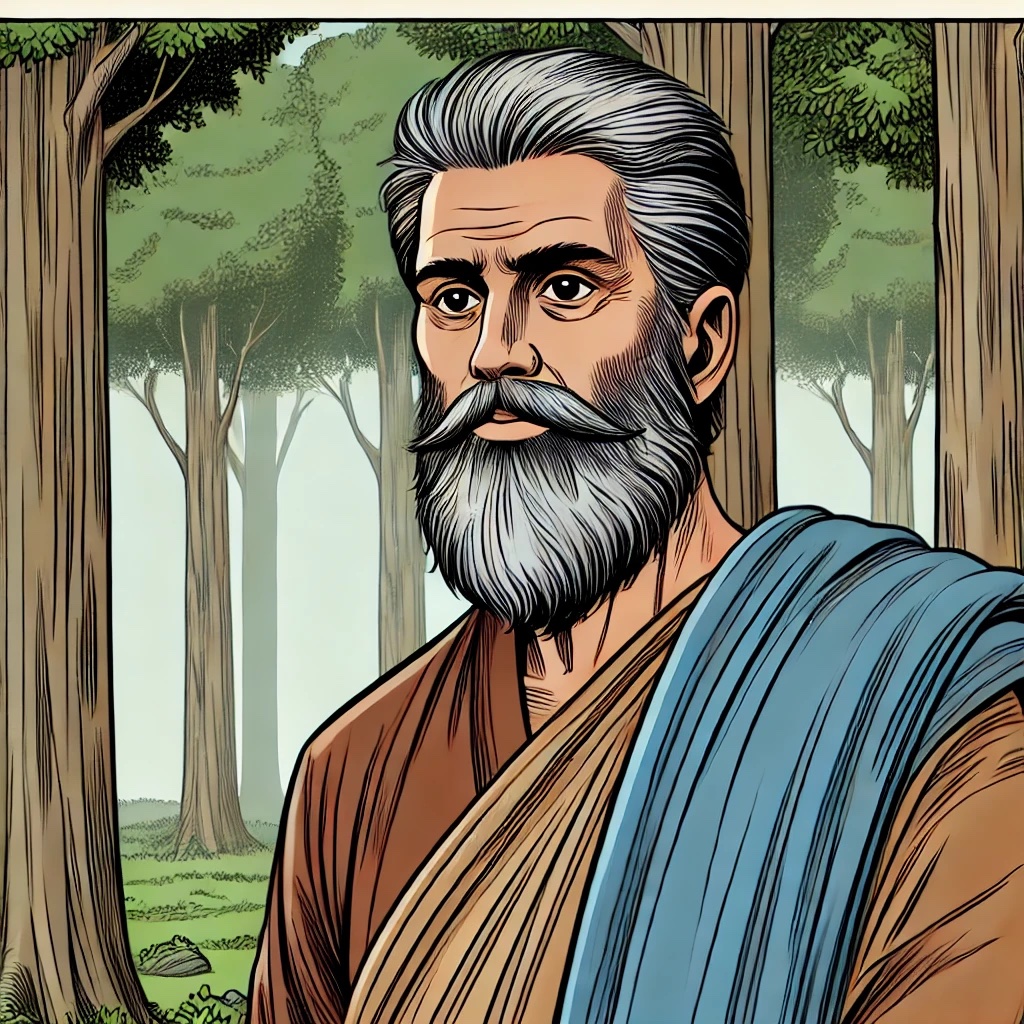
Pandu’s Ancestry
Pandu’s father was Vichitravirya, the younger son of Queen Satyavati and King Shantanu. After the untimely death of his elder brother, Vichitravirya ascended to the throne of Hastinapura. Bhishma, Vichitravirya’s half-brother, abducted the princesses of Kasi—Ambika and Ambalika—for Vichitravirya to marry.
Vichitravirya’s addiction to alcohol took a severe toll on his life. Despite the care and devotion of his family, Vichitravirya’s health declined. Eventually, he succumbed to his addiction, leaving Hastinapura without an heir and plunging the Kuru dynasty into a crisis.
After Vichitravirya’s death, Satyavati approached Bhishma, Vichitravirya’s half-brother, and the patriarch of the Kuru dynasty, and pleaded with him to father children with the widowed queens. Bhishma, however, had taken a vow of celibacy to allow his father to marry Satyavati, and so that their children would be the heirs to the throne.
“My vow binds me, Mother,” Bhishma said. “But we can invite a Brahmin to father sons with the queens to continue our lineage.”
Satyavati, before her marriage to King Shantanu, was a beautiful maiden known as Matsyagandha, the daughter of a fisherman. She was tasked with ferrying passengers across the river Yamuna. One day, the great sage Parashara needed to cross the river and was struck by Satyavati’s beauty. Parashara assured her that she would retain her virginity, and he would grant her a divine fragrance to replace her fishy odor.
On an island in the river Yamuna, surrounded by a mystical mist created by Parashara, Vyasa was conceived. Parashara then blessed Satyavati, transforming her into a fragrant beauty, and departed. Vyasa was originally known as Krishna Dvaipayana, because of his dark complexion (krishna), and his birth being on an island (dvaipayana). After his birth, Vyasa promised his mother that he would return whenever she needed him.
The Three Brothers
Vyasa grew up to be a revered sage, and the eventual author of the Mahabharata. Satyavati immediately thought of him and his promise when faced with the problem of continuing their lineage, and called upon him to father children with the widowed queens.
Ambika, the elder widow, was the first to meet Vyasa. Terrified by his dark skin, matted hair, and fierce countenance, she closed her eyes in fear during their union. As a result, her son Dhritarashtra was born blind. Next, Vyasa visited Ambalika. Ambalika turned pale upon seeing Vyasa. This fear caused her child, Pandu, to be born with pale skin. Satyavati, still not satisfied, requested Vyasa to try again. When Vyasa approached Ambika for a second time, she sent her maid in her place. The maid, unafraid and calm, bore Vyasa a healthy and wise son, Vidura.
Raised under Bhishma’s vigilant care, the three brothers—Dhritarashtra, Pandu, and Vidura—were trained in the arts of warfare, governance, and ethics. Bhishma, a master of archery and strategy, imparted his vast knowledge to them. Dhritarashtra, despite his blindness, was known for his immense strength, said to rival that of ten thousand elephants. Pandu became a master archer and strong leader. Vidura, though born of a maid, was renowned for his wisdom and unwavering adherence to dharma (righteousness).
When the question arose as to who would succeed Vichitravirya as the king of Hastinapura, Dhritarashtra, the eldest brother, was disqualified due to his blindness, and Vidura, though wise, was ineligible because of his birth to a maid. Thus, Pandu was crowned the king of the Kuru dynasty.
Kunti and Madri
Under Bhishma’s guidance, Pandu sought to strengthen his reign through strategic marriages. Pandu’s first marriage was to Kunti, the adopted daughter of King Kuntibhoja. Kunti was known for her exceptional beauty, virtue, and wisdom. Her swayamvara, a traditional ceremony where a princess chooses her husband from among assembled suitors, was attended by many kings and princes from across the land.
At the swayamvara, Kunti chose Pandu, drawn by his valor and noble qualities. Their marriage was celebrated with great pomp and ceremony. Kunti brought with her not only grace and dignity but also a significant boon. In her youth, she had served the sage Durvasa with such devotion that he granted her a mantra, allowing her to invoke any god and bear a child by him.
Following his marriage to Kunti, Pandu traveled to the Madra Kingdom, where he sought the hand of the beautiful princess Madri. Madri, famed for her beauty and grace, was the sister of King Shalya of Madra. Again, the marriage was celebrated in a grand ceremony, and Madri soon joined Pandu and Kunti in Hastinapura.
The Brahmin’s Curse
Determined to restore the glory of the Kuru dynasty, Pandu embarked on a series of military campaigns, known as Digvijaya, across Bharatvarsha. With a formidable army, and the support of Bhishma, his brothers, and their loyal followers he reclaimed many territories lost during Vichitravirya’s reign. His conquests extended from Dasarna to Magadha, and further to Videha, Kasi, Suhma, and Pundra. His victories brought immense wealth and prestige to the Kuru dynasty, and he generously shared his spoils with Bhishma, Satyavati, and his brothers.
While on a hunting trip, Pandu roamed the forest with his bow, searching for game. He came across a pair of deer in the throes of mating. Without realizing their true nature, Pandu shot five arrows at the deer, swiftly bringing them down. To his horror, the deer transformed into human forms—Kindama, a rishi, and his wife. Pandu approached the dying rishi with remorse. “Oh dear sage, please forgive me,” Pandu pleaded. “I mistook you for deer and acted as any king would in a hunt.”
Kindama, writhing in pain, responded, “I do not condemn you for hunting, Pandu, but for the cruelty of striking us during such a sacred moment. Your arrows have not only ended our lives but also violated our sanctity. For this grievous act, I curse you: Whenever you engage in sexual intercourse, you shall die instantly.” The curse weighed heavily on Pandu’s heart, filling him with guilt and sorrow. Realizing the implications of this curse, Pandu decided to renounce his throne and live a life of asceticism to atone for his sin.
Exile and Redemption
In the forest, Pandu sought redemption through asceticism, hoping to overcome the curse through penance. His wives, Kunti and Madri, devotedly accompanied him, choosing to share in his penance and solitude. Pandu, Kunti, and Madri eventually settled in the picturesque Shatashringa mountains, living a simple and austere life. They practiced rigorous penance, seeking spiritual solace and attempting to overcome the sorrow that had befallen them. Pandu’s days were filled with meditation, self-discipline, and contemplation.
Despite the serenity of their new abode, Pandu was deeply troubled by the inability to father children . The thought of leaving the Kuru lineage without an heir tormented him, and he often expressed his concerns to the rishis and sages who resided in the forest. Finally, Kunti, ever supportive and resourceful, revealed to Pandu the boon she had received from Sage Durvasa in her youth – a divine mantra that allowed her to invoke any god and bear a child by him.
At Pandu’s request, Kunti first invoked the god of dharma, Yama, and soon gave birth to a son named Yudhishthira. A celestial voice proclaimed, “This child shall be known for his righteousness and will uphold the principles of dharma. He will bring great honor to the Kuru lineage.”
Pandu then asked her to summon Vayu, the god of wind, next. Kunti complied, and Bhima was born. As soon as he was born, a divine voice declared, “This son will be the strongest of all men, with the power of ten thousand elephants.”
Pandu’s desire for a skilled warrior led Kunti to invoke Indra, the king of the gods. Thus, Arjuna was born. The celestial voice declared, “This son will be the greatest archer and warrior. He will achieve unparalleled feats and be the greatest hero of the kingdom.”
Madri then expressed her own desire to have sons. Kunti, compassionate and understanding, shared the divine mantra with Madri. Madri invoked the Ashvins, the twin gods of medicine and health, and gave birth to twin sons, Nakula and Sahadeva. The celestial voice announced, “These twins will be known for their beauty, wisdom, and valor. They will bring glory to the Kuru dynasty.”
The Curse Fulfilled
One day, while wandering through the forest with Madri, Pandu’s desire overwhelmed him. The sight of Madri, bathed in the glow of the spring sun, intensified his longing. Despite Madri’s attempts to remind him of the curse, Pandu’s passion overcame his reason. He embraced Madri, forgetting Kindama’s curse in the heat of the moment.
As the curse took effect, Pandu’s life force ebbed away, and he collapsed, lifeless, in Madri’s arms. Madri, stricken with grief and guilt, wailed in despair. Upon hearing Madri’s cries, Kunti and the young Pandavas rushed to the scene. Seeing Pandu’s lifeless body and Madri’s grief, Kunti tried to console her. However, Madri was inconsolable.
In her deep sorrow, Madri decided to join Pandu in death. She performed the ritual of sati, sacrificing herself on Pandu’s funeral pyre. She entrusted her sons, Nakula and Sahadeva, to Kunti’s care. Kunti, now the sole guardian of the five young princes, returned to Hastinapura with them, where they grew up under the wise guidance of Bhishma and Vidura, to play their own role in this epic tale.
Legacy
Pandu’s life is a poignant tale of triumph and tragedy, of strength and vulnerability. His story continuted through the life of his sons, the Pandavas, who played pivotal roles in the epic Mahabharata, ultimately shaping the fate of the Kuru dynasty. From Pandu’s conquests and the glory of his reign to his grave mistake and the subsequent curse, we learn about the intricate balance between power and responsibility, and how actions driven by impulse can have far-reaching consequences.